Saturday, 5 January 2013

Waxwings and People


Waxwings in sunshine
The weather of New Years Day in East Sussex was glorious, unlike the previous day when it was wet, and cloud reduced light levels to impossible levels for photography. With little hope, my wife and I drove into Lewes to try and take a nice series of photographs of the flock of waxwings that have taken up temporary residence in an area with luscious, bright red berries. One reason for the lack of optimism was an experience we had a day or two previously when there were no waxwings present when we arrived. We were told that they had been driven off by a few over enthusiastic people. The birds had been chased backwards and forwards as they attempted to descend from a row of poplars to feed on the berries below. The berries were on the other side of the road from the poplars. After we had parked the car, it was another two hours before the flock returned, and I achieved silhouette photographs of them sitting high in the poplars. There were still one or two people sitting in their cars, but as soon as the birds arrived, without any care taken, they were out of their cars, and rushing towards the best vantage point, between the poplars and the berries. While I was there, sitting patiently in my car, my wife off shopping, the birds never did descend to feed, and I left without any photographic success at dusk.

Best shot in the rain
It was a different story on New Year’s Eve. I decided to go into Lewes to do some supermarket shopping, and to see if the waxwings were behaving. Before shopping, I went to have a look at the roadside hedge with the berries. No sign of waxwings, or of people. However there really was plenty of rain. I did my shopping, and then thought I might as well go and have another go. There was one car there, and I could see its occupant was pointing his binoculars up at the poplars. A few starling like dots in the trees proved, with the help of my binoculars, to be waxwings. After a few minutes, he came and asked me if I had managed some good photos. All I had achieved were a few distant silhouettes. He drove off. The waxwings began to descend from the poplars, and feed on the berries. For me, the hedge with the berries was on the opposite side of the car, so I drove off, and turned round. By inching the car ever so slowly towards the berry laden bushes with the window already down, I was able to stop opposite, and within about four feet of several feeding waxwings. Two problems arose however. First, as soon as I had lowered the car window, I was splattered by rain, as was my camera lens when I tried to take photographs. Secondly I had not checked to see how much space there was left on the card in my camera. At that definitive moment when a row of three waxwings posed for me on the top of the fence, no more than six feet away, I pressed the shutter button, and nothing happened.


Wednesday, 28 November 2012

Experiences with Spiders

While I was away recently, there was discussion on the Web about the dangers of spiders in Britain. My first encounter with a spider that bit was in France when I was fourteen. At the time I was into geology, and picked up a piece of rock and started to examine it. After perhaps a minute, I felt a piercing sensation on my hand under the rock. I looked under the rock to see a medium sized spider biting me. It gave me a considerable shock. Whether it was a direct effect from the bite, or an emotional response I do not know, but I did feel rather flushed and dizzy.

Araneus diadematus
Garden Orb Spider
More recently my wife picked up that very attractive green spider Araniella cucurbitana and to her surprise, it gave her a nasty nip that was really quite unpleasant. Even more unpleasant was a nip from a harvestman that was nestling in a pot of chamomile she had bought from a local garden centre. I had never heard of harvestmen biting humans, but this particularly bite caused pain, and unpleasantness for some time.
Certainly I have heard that other orb spiders, and house spiders belonging to Tegenaria can bite, but have only heard very occasionally from people who have experienced bites.

Friday, 21 September 2012

Invasive Species and Wildlife Corridors

Oxford Ragwort Senecio squalidus
Recently I have become aware of PlantTracker which has been set up by the Environment Agency, the Nature Locator team at Bristol University and the Centre for Ecology and Hydrology. They are asking for help from the public to track down non-native species that are a threat to our native wildlife. It is well known how species such as Rhododendron ponticum, Fallopia japonica (Japanese Knotweed) and Crassula helmsii (New Zealand Pigmyweed) have become unwelcome aliens in our Country. There is a website and an app for use on smartphones to help locate the plants. The results are already proving to be of help to them and to the BSBI in identifying key risk sites for further invasion problems.

I well remember the excitement back in the 1970s that the late Dr Francis Rose showed when he first found Crassula helmsii in a small pond adjacent to Hatchet Pond in the New Forest. His excitement was caused by the fact that his initial identification of it was Elatine hydropiper, a very rare species that he had never seen before. Further research however put him right, and the truth was that he had had his first encounter with a most unpleasant alien. It did not take long for the whole of the bottom of that pond to be a one species carpet of Crassula helmsii with some important species crowded out completely.

The first occurrence of Crassula helmsii in the New Forest was recorded by the late and very able, deaf botanist Paul Bowman. His notebook showed that having found Crassula helmsii nearby, he then drove to Hatchet Pond. Circumstantial evidence suggests very strongly that a small piece of the plant may well have attached itself to his boot. This shows just what an invasive threat this species must be. The original source of the invasion is thought to have been an aquarist supply shop in Essex.

The story of Oxford Ragwort Senecio squalidus is fascinating. This species is now ubiquitous on the tops of walls and throughout Britain’s railway system. It is now completely taken for granted as part of the British flora. It is called Oxford Ragwort because it was grown in Oxford Botanic Gardens in the late 17th century having been collected from volcanic cinders on the slopes of Mount Etna. It was a small hop from its flower bed in Oxford to the walls of the Botanic Garden from whence it found the walls in the rest of the City and, from 1844, the cinders on the early railway tracks passing through the town. In no time at all, it had established itself throughout Britain on its fast expanding railway network.

Friday, 24 August 2012

Dicing with Dangerous Natural History

Recent postings on Facebook from a naturalist who decided to acquire personal experience of the effects of giant hogweed on her arm reminded me of someone I knew in the New Forest who wanted to find out about the effects of the bite of the large tabanid fly Tabanus sudeticus. There cannot be many who have not been plagued by that silent but deadly pest, the horse-fly but how many have actually been bitten by other tabanid flies in Britain. Of course in Africa, it is a tabanid fly, the tsetse fly that carries the deadly sleeping sickness.

Giant Horsefly, Tabanus sudeticus, New Forest
The Giant Horsefly Tabanus sudeticus is comparatively common in the New Forest where it preys on horses. New Forest ponies can often be seen rushing around to avoid being bitten by the noisy Tabanus sudeticus which is certainly not as insidious and silent as the horse-fly we all know and hate. However once on a horse’s back, and in a part of its anatomy where the tail cannot brush, Tabanus sudeticus can cling on and will not be disturbed as it feeds. The chances of any human being bitten by Tabanus sudeticus, as it is such a clumsy, noisy beast are remote. A naturalist friend of mine decided he wanted to experience personally the effects of this fly. He caught one in a jam jar, and then applied it to his hand. The fly took some time to take the hint, but eventually began by scything with its mouth parts to make a wound. Blood began to escape from the wound, and the fly enjoyed its meal. My friend’s first reaction was “Well that’s pretty innocuous.” However, a few hours later his hand swelled up like a balloon, and he became really very ill.

Poison Ivy, Dallas, Texas
I remember the first time I visited Texas being tempted to see if I were effected by poison ivy. In retrospect, I think to have conducted an experiment on myself would have been both foolish and unpleasant. I remember my wife telling me about an Indian colleague of hers at work who complained that in Britain, brushing against vegetation was strangely unpleasant and hurtful. The fact was she had never experienced stinging nettles before. A few years ago, I was undertaking an ecological survey in East Sussex when I found a nettle with narrow leaves. I had recently heard about the Fen Stinging Nettle Urtica galeopsifolia that has narrow leaves, and is supposed not to sting. Having looked at the leaves carefully and being fairly reassured that there were few, if any stinging hairs, I touched it gingerly. I was not stung. Was this a good enough indication that I had found the species? In fact, I still believe that the actual status of Urtica galeopsifolia is in doubt, and that it may simply be a form of the normal, unpleasantly painful stinging nettle we all know and avoid.

As a naturalist, reactions to danger can be less healthy than those of other humans. I well remember being in the Pamir Mountains in Uzbekistan when a member of the party I was leading shouted up to me that he had spotted an Asian Cobra. My immediate reaction was to rush down the hillside, and I was rewarded by seeing the snake as it slid off into the undergrowth. On another occasion, my party was stranded in Tashkent. Our transport onwards to Kirghizia was delayed as senior soviet officials had purloined all the seats on the flight we were to have taken. We had a day that was fallow, and the local organisers of our trip wondered how to keep us amused. We were taken to a zoological institute, and shown cabinets full of bird skins. This did not keep us occupied for long. Then someone had a brainwave. Would we like to see the snakes? We were taken to the relevant part of the building and ushered into a rather small office. In the corner was a cage. Between us and its contents there was nothing but a layer of chicken wire. I was at the front of our group, and to say I was uncomfortable when the cage was opened would be an under-statement. The inhabitants of the cage reared up, fanning their heads as our host pushed his hand towards them. They were Asian Cobras. “They’re quite harmless,” our host explained, “Rearing up like that is all show. You really have to positively persuade a cobra to bite you.”

For the next stage of the visit, we were ushered into laboratory where a taciturn scientist was handling a Soviet species of pit viper. The most poisonous snake in the Soviet Union, he told us. He held it behind its head, and pushed its fangs into a beaker. Two jets of a colourless liquid squirted into the beaker, and these would be used to produce anti venom.

“Do you ever make any mistakes?” a member of the party asked. For answer, the scientist held up his hand. One of his fingers was missing, and he explained that he had to decide whether to use an axe lying close to him, or die.

Silk-moth caterpillar, with poison spines, from Ecuador
I am lucky in that I am not affected by the hairs on the tails of brown-tail moths. I have never actually done an experiment to prove this, but have come into contact with sufficient of them, and of other British caterpillars to know that I am probably immune. In Ecuador once, I came across the caterpillar of a species of silk-moth armed with vicious looking spines. Our local guide told us that those spines contained a venom quite powerful enough to put you in hospital.

There is a certain thrill that many humans, and probably many naturalists have in close encounters with dangerous plants and animals after they have got away with the encounter. On one occasion, a local guide told me of an eyelash viper behind a vine on a massive rain forest tree in western Costa Rica. I went down to investigate and failed to spot it.

“Your eyelash viper has gone,” I told the local guide when I saw him later.

“When was that?” He asked

“Oooh, about an hour and a half ago,”  I replied.

“Well it was there twenty minutes ago.” He assured me. After he told me exactly where it was, I went back and sure enough, looking obvious it was very much still there. I shuddered when I remembered that I had looked for lichens with a handlens on that tree when I thought it was safe to do so.

Eyelash Viper, Costa Rica
On another occasion in Costa Rica, the rest of my party went off horse riding for the day. I decided to have a day to myself. I walked off down several lanes, and found a dry hillside which looked promising. I became aware of a bird call which consisted of two whistle like notes. After a while, I found I could do the top notes, and the bird would reply with the lower note. Very gingerly, I began to approach the sound and I was rewarded with good views of a delightful Lesser Ground Cuckoo. When I got back to the centre, I told the local guide where I had been. After satisfying himself with my location he said. “That was not very sensible. That particular hillside is home to a large number of tropical rattle snakes.”

Thursday, 16 August 2012

Woodland Continuity

Common Lungwort - Lobaria pulmonaria
It was Francis Rose who, way back in 1974, first recognised the value of lichens in assessing ecological continuity in woodland. A list of seventy species was compiled by the British Lichen Society which were found to be most closely associated with ecological continuity and lack of disturbance. This list was used to arrive at the New Index of Ecological Continuity (NIEC). Added to this, a list of rarer, bonus species could be used to calculate a second index. These indices work well for much of Britain, however further indices were formulated for areas where other lichens were found to indicate continuity. Where the large and showy common lungwort Lobaria pulmonaria works well as an indicator throughout much of England, it is a common species in Western Scotland, and its presence there cannot be used as an indicator of continuity. For upland England and Wales, as well as in Western Scotland, the Eu-Oceanic Calcifuge Woodland Index is used. Further indices are used in Scotland and Western Ireland.

Heterodermia japonica growing amongst a form of
Hypnum cupressiforme
It was noticed while undertaking a survey in Eastern Cornwall in a nature reserve known to consist of ancient woodland, that the nationally scarce lichen Heterodermia japonica occurring on a beech branch was fertile, and supported a number of small, disc like fruits or apothecia. A day or two later, there was a depression in the lichen where the fruits had been. It seemed most probable that a slug had browsed them off. Some six months later, the site was revisited, and small daughter colonies of the lichen were found up to six feet away from the parent lichen. If, as seems probably the main vector for spreading the spores of ancient woodland indicator lichens is the digestive system of slugs, then distribution is going to be very slow indeed. No slug will ever take the trouble to cross a major road simply to spread a particular species of lichen.  Slugs are also ideal as vectors as the spores are conveniently attached to the substrate in their slime trail. It would be interesting to experiment by collecting slugs from known ancient woodland sites and introduce them to more recent sites to see if indicators of continuity became established.

Francis Rose, and Richard Hornby of the then Nature Conservancy Council, made a list of higher plants reckoned to be associated with ancient woodland. While the clear felling of a wood totally removes the corticolous lichen flora, higher plants are more robust, and are therefore useful in assessing ancient woodland sites. It is most important to remember that the higher plant list consists of common species, and that it is the total of species present that is significant. The absence of rarer species lacks significance just as does the presence of one or two of the common indicators. Higher plant indicators are all photosynthetic, and therefore need adequate light levels. In many ancient woodlands, due to the current lack of grazing, the ancient woodland flora is confined to rides, or to the roadside banks of the edge of woods.


The British Bryological Society have also made a list of mosses and liverworts most closely associated with woodland continuity that works well and I understand that in the insect world, similar lists of beetles and hoverflies have been made. It would be most interesting to know if there are correlations between all ancient woodland indicator lists.

Barnacle Lichen - Thelotrema lepadinum
One of the difficulties of using lichens, and to a lesser extent bryophytes as indicators of ecological continuity is their sensitivity to air pollution. Throughout most of Central and South-eastern England until some thirty years ago, acid rain and industrial pollution all but destroyed the lichen flora totally, and with it the information it could give. It is lucky that the Barnacle Lichen, Thelotrema lepadinum, which is a most useful indicator, is relatively tolerant of sulphur dioxide in the atmosphere, and it has been found, as would be expected due to the ecological continuity of the sites, in both Epping Forest and Hatfield Park. Even low lichen indices of continuity in these areas can be treated as significant.

Most of the early work that related lichen richness with ecological continuity took place in the deciduous woodlands of England, Wales and North-western Scotland. In Central and Eastern Scotland there are pine forests of great ecological importance and continuity. The lichen flora associated with these trees is very different, as are the habitats they provide. Dr Brian Coppins, the foremost Scottish lichenologist, is known to say that the only good pine tree [for lichens] is a dead pine tree. He points out that a pine provides habitat for lichens for a longer period as a standing dead tree than it does when alive. While coppice woodlands with hazel or hornbeam in England can be important for lichens, and the coppice poles can support a rich flora, this is nothing compared with the incredible richness found in a few very important and ancient hazel woodlands in western Scotland and in the Hebrides.

A further index using lichens is also used, but these days only occasionally. This is the Revised Index of Ecological Continuity (RIEC). In this case thirty species are used, and by multiplying the number of species by 5, a figure for the index is found as a percentage. A score of 100% is reckoned to equate to a wood with perfect ecological continuity. However scores higher than a hundred are possible such as Glen Shira in Scotland with a score of 130%. Using the New Index of Ecological Continuity, a total of thirty or more species that includes bonus species is thought to indicate a wood of high conservation value. Parham Park which is arguably the best example of ancient woodland in Sussex has a total of 27 NIEC species added to which should be 3 bonus species bringing a total score of 30. In other parts of Britain, much higher totals are found.

Francis Rose was never keen to indicate the meaning that should be given to higher plant indicator totals. However, he told me he was of the opinion that a score below twenty species indicated a wood of low conservation interest. Similarly a score of twenty bryophytes indicate conservation value, though this is reduced to fifteen throughout South-eastern England.

Hoverfly - Calliprobola speciosa
Beetle - Helops caeruleus
Some groups of insects also contain species that are good as indicators of ecological continuity. Two groups certainly spring to mind which are  hoverflies and beetles. Two illustrated here are the rare New Forest hoverfly Calliprobola speciosa which could be used, as could the beetle Helops caeruleus. There are many more hoverflies and beetles that could be used as indicators of ecological continuity.

This account has been to do with ancient woodland with continuous canopy cover. This type of woodland is not rich in butterflies. For butterfly richness, it is the woodland rides and their floristic richness that are important.  Woods such as Bernwood in Oxfordshire are soft wood plantations, but the richness of the rides make them outstanding for insects such as butterflies. Beautiful bluebell woods are not examples of woodland with long continuity, but are none the less very important. Similarly, it is coppiced woodland that generally provides habitat for greatest flowering plant biodiversity. It is a balance that is required as well as the importance that is given to woodland with a long history.

Saturday, 14 July 2012

Personal Experience of Volcanoes and Wildlife 1

Over the last day or two, I have been thoroughly enjoying the BBC 2 series Volcano Watch. There have been some fantastic images, as well as links between volcanic activity and the wildlife associated with them. Over the last twenty years or so, I have had the great good fortune to be a leader of wildlife holidays and to lecture on cruise ships. This has taken me to many parts of the world and several have been in areas with considerable volcanic activity.

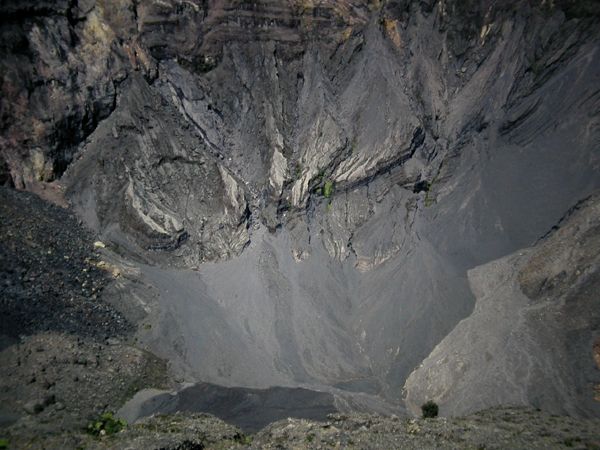
My first experience of a volcanically active part of the world was in Costa Rica  in 1990. Our local guide told us that in 1964 when President Kennedy visited Costa Rica, the country gave him a twenty one gun salute. This was the violent eruption of Volcan Irazu, a mountain over ten thousand feet, which can be seen from the capital San José. The eruption was considerable, and the city was affected by a layer of ash.

When I first visited Volcan Irazu in 1990, there was a whiff of bad eggs in the air, the crater which I was told at the time was the largest on earth was empty, and the cone sides contained masses of eroding ash.

The main, most recent crater of Volcan Irazu photographed
in 1990
The most recent crater photographed in 1994 and now
filled with a sulphurous lake
Cloud forest on the slopes of Volcan Irazu affected by
pyroclastic flow

By 1994 and my second visit, it had filled with water, and had a sulphurous lake in the cone, and the water appeared to be boiling. One of the highlights of the day for my group was to have a look at cloud forest on the upper slopes of Volcan Irazu.

Finding an open piece of woodland that would give a good opportunity to scan, I stopped the coach. The trees were stunted with considerable expanses of open grass between them. The terrain had a certain similarity with the New Forest, and I wondered what animals could be responsible for the grazing. Certainly, there was no evidence of large numbers of cattle or horses up in the mountains. One stunted tree supported a mass of flowers in its upper branches, which were only about ten feet above the ground. I noticed these flowers had attracted a tiny, jewel like hummingbird. This was the Volcano Hummingbird in its Mount Irazu form, a species confined to a very few of the higher volcanic mountains of Costa Rica. It turned out that this very unusual woodland had been created by a pyroclastic flow that had passed over the cloud forest, stunting it, killing most trees and creating a unique landscape and ecology.
Volcan Irazu photographed in
1994 in a more pensive mood


Volcan Poaz photographed with a plume of steam, and still
quite active

Saturday, 7 July 2012

Dynamic Woodland

The secret to understanding the ancient woodland cover in northern Europe and America is to appreciate the relationship between meat on the hoof, and deciduous woodland. Shortly after the last ice age, enormous herds of steak rampaged their way across the countryside, ripping, munching and felling the vegetation in the countryside.

Vinney Ridge. A large beech tree in New Forest woodland
    dominated by beech
Although European rainfall is higher, as they do in modern Africa, the northern equivalent of elephants, woolly mammoths, would have torn down trees, and brought down branches for food. All this dynamic activity would have had a profound effect on the ecology of those days. Native Americans saw the importance of this balance, and did not treat the huge herds of bison that roamed as an unlimited resource that would continue without some sort of management. Not so the stone age human equivalent in Europe. Here, bison and grazing animals were brought to the verge of extinction in prehistoric times through uncontrolled hunting and lack of management.

It was Franz Vera who, in his ground breaking book Grazing Ecology and Forest History, brought to the attention of ecologists the importance of the balance between grazing and woodland in the northern hemisphere. An understanding and appreciation of the finest, most natural non man managed woodland moved from forests in Poland to the British New Forest. The New Forest consists of a mosaic of habitats which have been created by herds of grazing animals. These animals create areas of grassland known locally as lawns. The ancient New Forest woodland contains little regeneration, a more open shrub layer and a particularly impoverished ground flora. The tradition in medieval Britain for deer hunting by the king and his nobles created the New Forest, and the English medieval deer parks. Since William the Conqueror, the New Forest has been managed, one way and another primarily as a food resource for grazing animals.